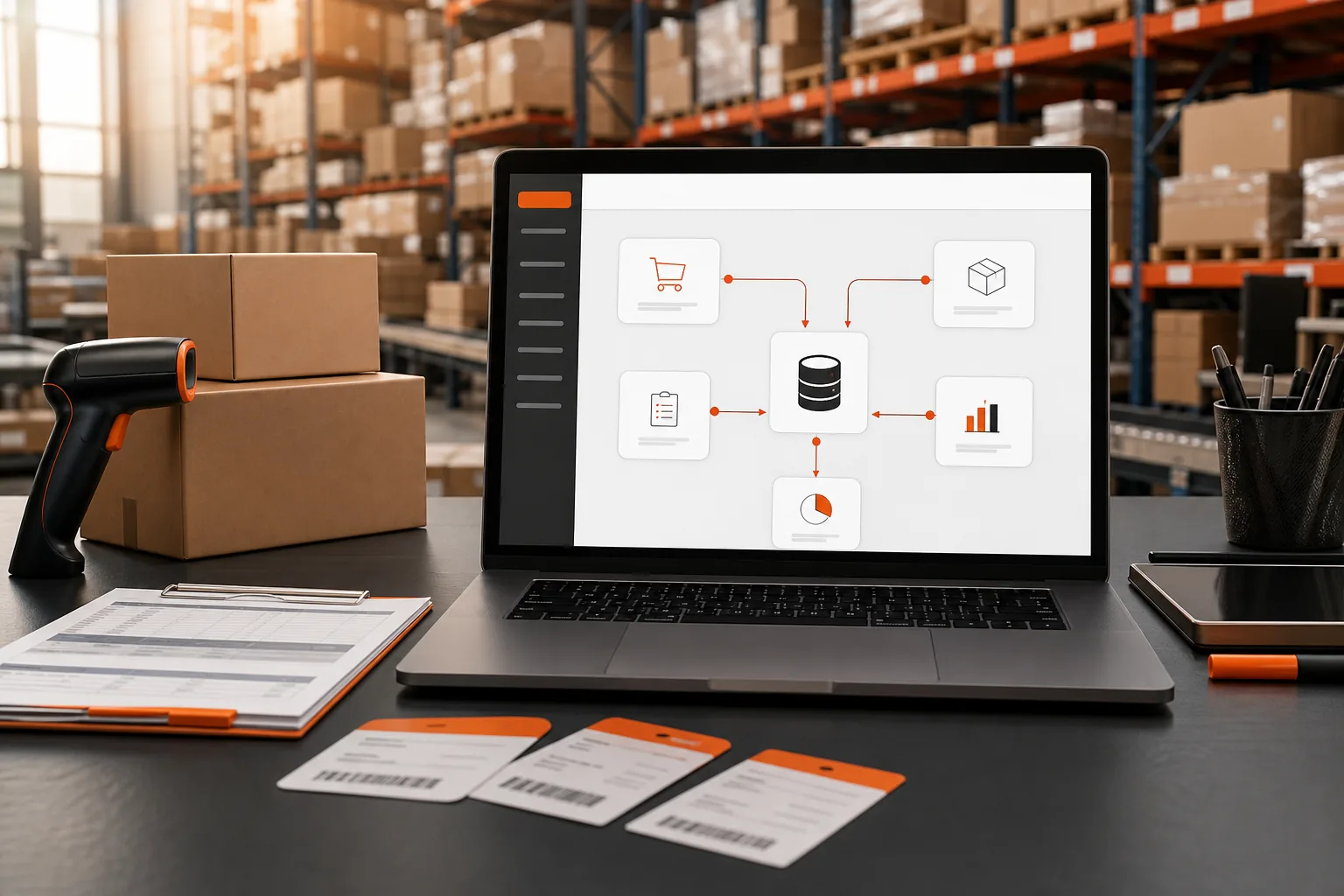
The honest answer is that most small Shopify stores don't need ERP software.
Spreadsheets and a basic inventory app handle under 50 orders a month with one supplier just fine.
The overkill line moves fast, though: add a second supplier, start importing from overseas, or need to track landed cost per unit, and the same spreadsheet that worked in January starts hiding errors that show up as a wrong number on your P&L in Q3 2026.
In Short
ERP software is overkill for small Shopify stores under about 50 orders a month with one supplier.
Multiple suppliers, overseas freight, or landed cost tracking push you past spreadsheets fast in 2026.
Cin7, Inventory Planner, and SupplyAutomate fit different stages, and none of them replace spreadsheets at low volume.
Full ERP starts paying for itself once monthly orders top roughly 300 or SKU count exceeds 200.
If you already know you need the connection map, use Shopify ERP.
If Amazon is the larger book, use ERP for Amazon FBA.
If Shopify and Amazon share one inbound, use ERP for ecommerce.
Stay here when the question is whether you should buy any of it yet.
The Cost Of Buying Too Early Or Too Late
Buying ERP software too early wastes money and time.
You are paying for supplier management, multi-warehouse routing, and landed cost automation you do not need yet, and someone still has to learn the system.
Buying too late costs more.
A founder running three suppliers out of a shared Google Sheet in 2026 is usually one fat-fingered exchange rate away from mispricing a product line for a full quarter.
The real question is not "is ERP overkill" in the abstract.
It is whether your specific order volume, supplier count, and SKU complexity have crossed the point where a spreadsheet's error rate starts costing more than the software would.
Is ERP Software Overkill For A Small Shopify Store?
For most stores under 50 orders a month with a single supplier and fewer than 30 SKUs, yes: full ERP and landed cost software is overkill.
A spreadsheet, a Shopify inventory app, and a shared drive for invoices cover that volume without breaking.
Use this as the sizing table, not as a vendor scorecard.
| Store profile | Monthly orders | Suppliers | Right-sized tool | Verdict |
|---|---|---|---|---|
| Early-stage DTC | Under 50 | 1 | Spreadsheet + Shopify apps | Skip ERP |
| Growing Shopify/Amazon hybrid | 50-300 | 2-3 | Inventory Planner or Cin7 for forecasting, manual landed cost | Wait |
| Multi-supplier importer | 300+ | 3+ | Full ERP with landed cost and PO automation | Buy |
| Amazon FBA scaling fast | 300+ | 2+ | ERP with AI invoice processing | Buy |
The Shopify supply chain app review is the category map if you are still shopping inventory apps, not a suite.
The templates are the right first system while you are in the Skip row.
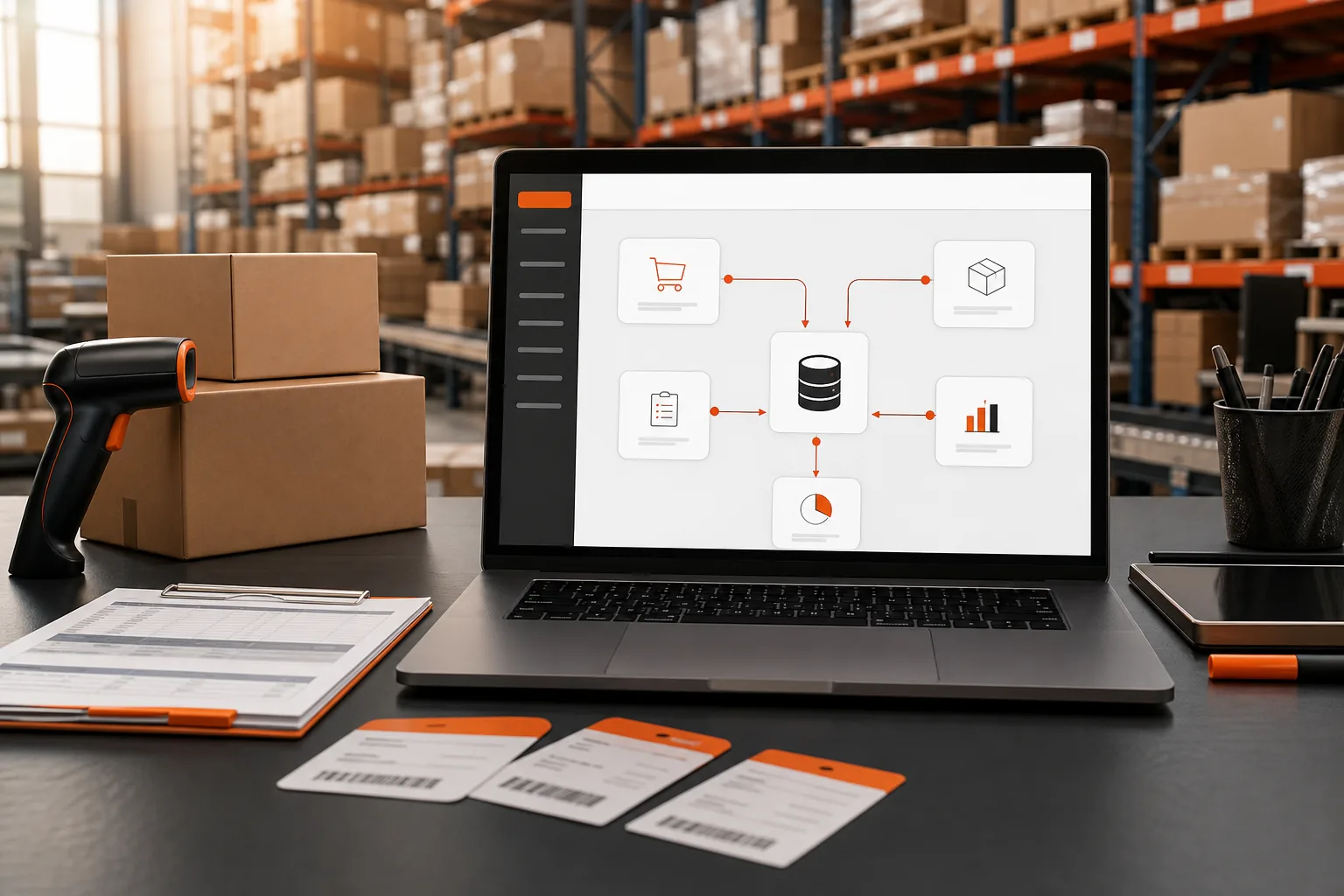
Under 50 Orders A Month: Spreadsheets Still Work
At this volume, the work is a weekly PO, a Shopify inventory count, and a folder of invoices.
One person can still see the whole picture.
A sheet plus a basic Shopify inventory app is enough when you have one supplier, a short catalog, and freight that does not change the unit cost in ways you cannot explain.
You do not need Cin7 to receive into three warehouses.
You do not need Inventory Planner to forecast a catalog you can recite.
You do not need SupplyAutomate to file four invoices a month.
Keep the landed cost calculator next to the sheet if you want a clean rebuild of one inbound.
Buy software later, when the file starts lying.
50 To 300 Orders A Month: Automation Helps, Full ERP Is Still Early
This is the messy middle.
A second or third supplier shows up.
You may add Amazon next to Shopify.
Forecasting starts to matter because stockouts cost more than they did at 40 orders a month.
Inventory Planner is the right shape when the weekly question is "how many should we buy."
Cin7 is the right shape when locations, channels, or light receiving are the pain.
Landed cost can still be manual in this band: a sheet, the Shopify landed cost walkthrough, and the calculator.
Full ERP is still early if one person owns purchasing and the books can wait for a monthly journal.
Wait on the suite.
Automate the one job that is actually breaking: the forecast, the location count, or the inbound file.
300+ Orders A Month Or 3+ Suppliers: ERP Earns Its Keep
This is where a spreadsheet's error rate starts to cost real money.
Three suppliers, mixed freight, and a catalog past about 200 SKUs is more than a shared Drive folder can keep honest.
A full ERP with landed cost and PO automation starts paying for itself when monthly orders top roughly 300, or when a second person cannot reconstruct unit cost without a hunt.
Amazon FBA stores scaling through that volume usually need the same buy, with invoice processing on the inbound, because FBA inventory and the factory file disagree every week.
See ERP for Amazon FBA for that channel.
See ERP for ecommerce when Shopify and Amazon share one inbound.
Why The Overkill Threshold Varies
Order volume is the easy number.
It is not the only one.
Two stores at 80 orders a month can need different tools.
Supplier Count
One factory and a repeating PO is a sheet problem.
Two or three factories, each with a different lead time and currency, is where the file starts hiding the wrong number.
Supplier count moves the line faster than order volume for most importers.
SKU Complexity
Fewer than 30 SKUs is still a mental model.
Past about 200 SKUs, variants, kits, and mixed cartons, nobody is keeping landed cost straight in one tab.
Freight Mode
Domestic parcel is a shipping column.
Overseas ocean, air, duty, and a freight bill that arrives after you already sold through the lot is a cost-system problem.
Run the legs through the lead time calculator before you treat "ex-factory" as sellable.
Channel Mix
Shopify alone is simpler than Shopify plus Amazon, or Shopify plus wholesale.
Each channel has its own available number.
The ecommerce ERP page is the multi-channel version of this decision.
Team Size
One founder can keep a messy sheet current.
Two people editing copies is how a Q3 P&L gets a unit cost nobody can defend.
Currency Exposure
A single USD supplier is a rounding error.
Three suppliers and a fat-fingered exchange rate can misprice a product line for a full quarter.
What Is The Difference Between An ERP And Inventory Management Software?
Inventory management software tracks stock and, in the better tools, tells you when to reorder.
Inventory Planner is that job: sales history in, suggested PO out.
Cin7 sits heavier: stock by location, purchasing, receiving, sometimes light manufacturing.
An ERP is the wider system.
It ties inventory to purchasing, documents, landed cost, and usually the books.
Enterprise resource planning is the textbook name.
Shopify's own ERP comparison for merchants makes the same split: the storefront is not the back office.
You can outgrow a spreadsheet and still not need a full ERP.
You may need a forecast tool, a location tool, or a landed-cost record first.
Can I Use QuickBooks Instead Of An ERP For My Shopify Store?
Yes, for the books.
No, if you are asking QuickBooks to be your purchase-order system, your supplier file, and your landed-cost model.
QuickBooks is good at invoices you already understand.
It is a weak home for a mixed container, a revised freight bill, and a SKU cost that has to update when the documents land.
Landed cost in QuickBooks is the accounting version of that gap.
Keep QuickBooks.
Do not pretend it is an ERP because the Shopify connector can push orders.
If you need to check price after fees, the profit margin calculator sits beside the cost record.
It does not replace the record.
When Should A Shopify Store Switch To ERP Software?
Switch when the spreadsheet's error rate costs more than the software.
In practice that is usually one of these:
- Monthly orders have moved past about 300, or SKU count has moved past about 200.
- You have three or more suppliers, or you are importing on ocean freight and tracking landed cost per unit.
- A second person cannot reconstruct last inbound's unit cost or ship date from one file.
- Shopify, Amazon, and the sheet each show a different available number, and you are pricing the next PO on the cheapest one.
Do not switch because a demo said "low stock."
Do not switch at 40 orders a month with one supplier because a consultant ranked you against a mid-market rollout.
If the fire is still "how many to buy," try Inventory Planner before a suite.
If the fire is locations and receiving, try Cin7 before a suite.
If the fire is documents, dates, and unit cost on the inbound, a focused importer system can cover that without a general ledger project.
See If You Have Outgrown Spreadsheets
If you are still in the Under 50 / one-supplier row, stay on the sheet.
SupplyAutomate is not a better spreadsheet for that store.
It will not earn the hour it takes to set up.
If you have added a second supplier, started importing, or you cannot explain last quarter's unit cost without opening three folders, you have outgrown the file.
SupplyAutomate is built for that stage: purchase orders, supplier documents, and landed cost in one workspace.
Upload the invoice, packing list, and freight bill.
Match them to the PO.
See the SKU cost and what is still late.
It is not Cin7.
It is not Inventory Planner.
It is not NetSuite.
It will not replace a forecast tool if demand planning is the only fire, and it will not replace a controller's ERP if you already need entities and a global chart of accounts.
Start with one recent PO and its documents, not a catalog import.
The templates and the landed cost calculator will tell you whether the last inbound still fits in a sheet.

FAQ
Is ERP Software Overkill For A Small Shopify Store?
Yes, for most stores under about 50 orders a month with one supplier and fewer than 30 SKUs.
A spreadsheet, a Shopify inventory app, and a shared drive for invoices cover that volume.
It stops being overkill when a second supplier, overseas freight, or landed cost tracking makes the sheet's error rate more expensive than the software.
What Is The Difference Between An ERP And Inventory Management Software?
Inventory software tracks stock and often forecasts the next PO.
Cin7 and Inventory Planner live in that layer.
An ERP ties inventory to purchasing, documents, landed cost, and usually finance.
A small Shopify store can need the first without the second.
Can I Use QuickBooks Instead Of An ERP For My Shopify Store?
Use QuickBooks for the books.
Do not use it as your PO system or your landed-cost model.
The Shopify connector can move orders and still leave freight, duty, and the factory file in email.
When Should A Shopify Store Switch To ERP Software?
When monthly orders top roughly 300, SKU count exceeds about 200, or you are running three or more suppliers with landed cost you cannot reconstruct from one file.
Until then, size the tool to the job: sheet, Inventory Planner, Cin7, or a focused importer system.
Do Cin7 And Inventory Planner Replace Spreadsheets At Low Volume?
No.
None of Cin7, Inventory Planner, or SupplyAutomate replace a sheet when you have one supplier and a quiet month.
They fit later stages.
Inventory Planner first if the question is how many.
Cin7 first if locations and receiving hurt.
A landed-cost workspace first if the invoices never reach the SKU.
Supplier Count Usually Moves The Line First
People ask this question as if order volume were the whole story.
It is not.
A store at 40 orders a month with one domestic supplier should keep the spreadsheet.
A store at 80 orders a month with three overseas factories is already past it, even if a vendor would still call that store "small."
Watch the suppliers, the freight, and whether last inbound's unit cost is a number you can still defend.
That is the overkill line.
The rest is learning a system you did not need yet.