
Amazon FBA supply chains get messy fast. A late supplier, wrong landed cost, or stock gap can wipe out a good month. Here are the best software picks for Amazon, Shopify, and WooCommerce sellers, with each tool matched to a clear job.
1. SupplyAutomate
SupplyAutomate is AI-driven supply chain software for Amazon FBA and Shopify sellers who import products and manage suppliers.
It brings purchase orders, supplier messages, invoices, freight bills, and landed costs into one browser-based workspace. We use AI to read documents, match them to the right order, and show what each SKU really costs after freight, duty, FBA fees, and other charges.
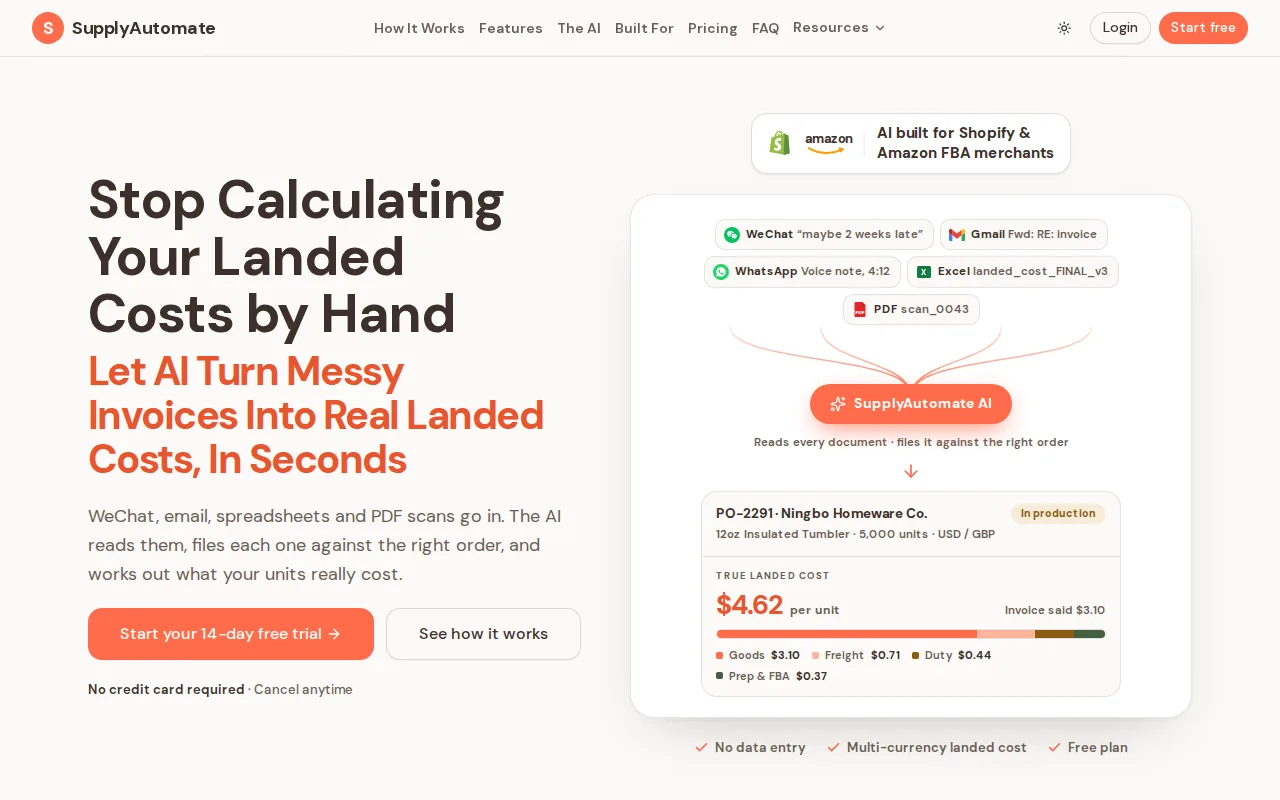
That makes SupplyAutomate the strongest fit when your main question is, "What did this product really cost me?" It also helps when you sell on both Amazon and Shopify, since most tools in this set focus on Amazon alone.
The caveat is scope. SupplyAutomate is built for eCommerce import work, not broad factory procurement or enterprise finance governance. If your pain sits with supplier follow-up and margin visibility, compare supplier management software for Amazon FBA, Shopify, and WooCommerce sellers, then start with SupplyAutomate's AI supply chain software.
2. ShipStation, multichannel shipping automation for growing FBA brands
ShipStation is a shipping tool for Amazon sellers processing roughly 100 to 5,000 orders each month across more than one channel.
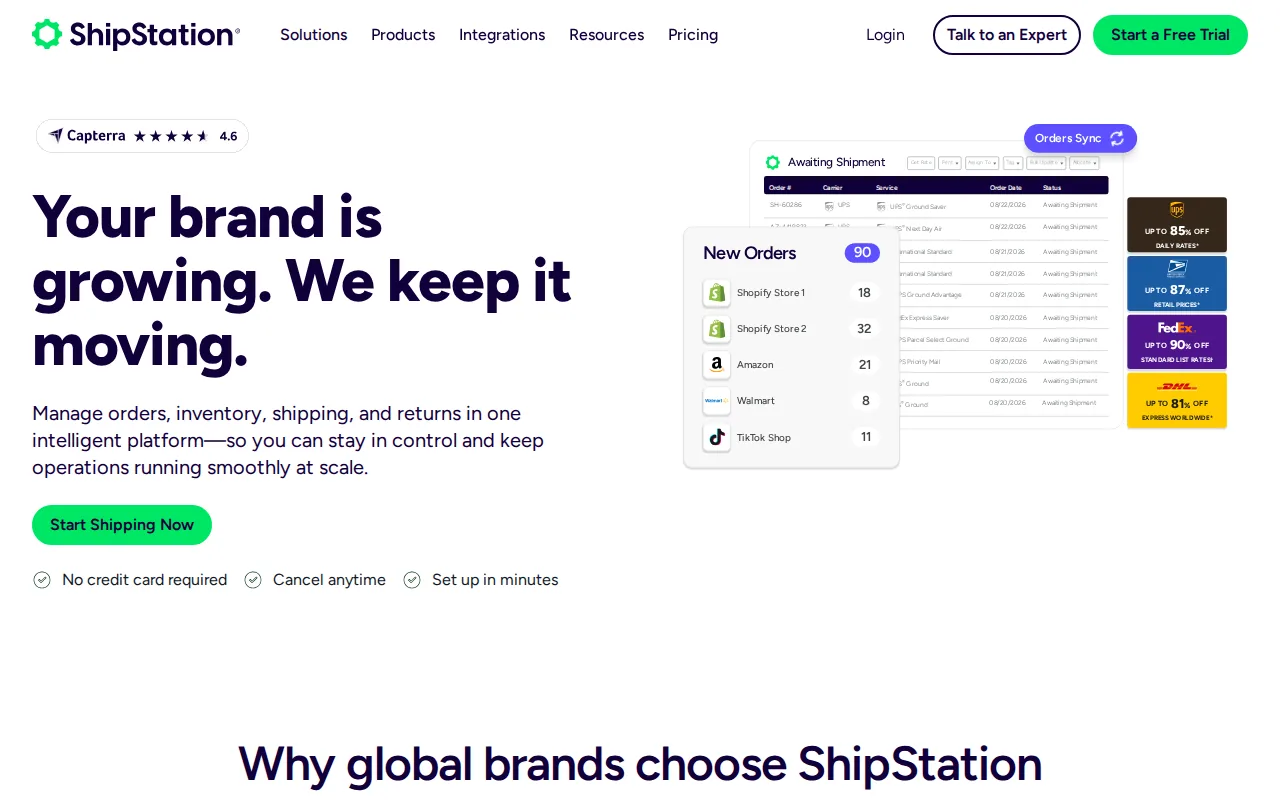
Its grounded strengths are Amazon Seller Central integration and access to more than 40 carriers. That suits brands that split fulfillment between FBA and their own warehouse. The workflow can bring orders into one queue, apply shipping rules, then send tracking data back to the sales channel.
Think of it as the shipping layer in your Amazon FBA supply chain software stack. It helps with labels, carrier choice, batch work, and last-mile tracking. It won't replace a purchase order system or calculate your full supplier-side landed cost.
ShipStation is a sensible pick when shipping volume is the bottleneck. New sellers may find the setup heavy, so budget time to map rules before peak season.
3. ShipPost, AI-driven shipping cost optimization across marketplaces
ShipPost is aimed at growing Amazon sellers who want shipping cost forecasts while expanding across channels.

ShipPost offers AI-driven cost optimization for growing Amazon sellers expanding into multichannel selling.
That matters when a product looks profitable in Seller Central but loses money after the carrier invoice arrives. ShipPost connects with Amazon Seller Central, Walmart Marketplace, Shopify, and eBay, so it fits a seller with a growing multichannel order flow.
Its focus is shipping economics. You should still pair it with software that tracks supplier documents, purchase orders, and inventory value. If the main issue is cross-channel delivery cost, ShipPost deserves a test.
4. ShipWorks, granular automation for high-volume FBA shipping operations
ShipWorks is for established Amazon sellers with complex shipping needs and a team that wants detailed rule control.
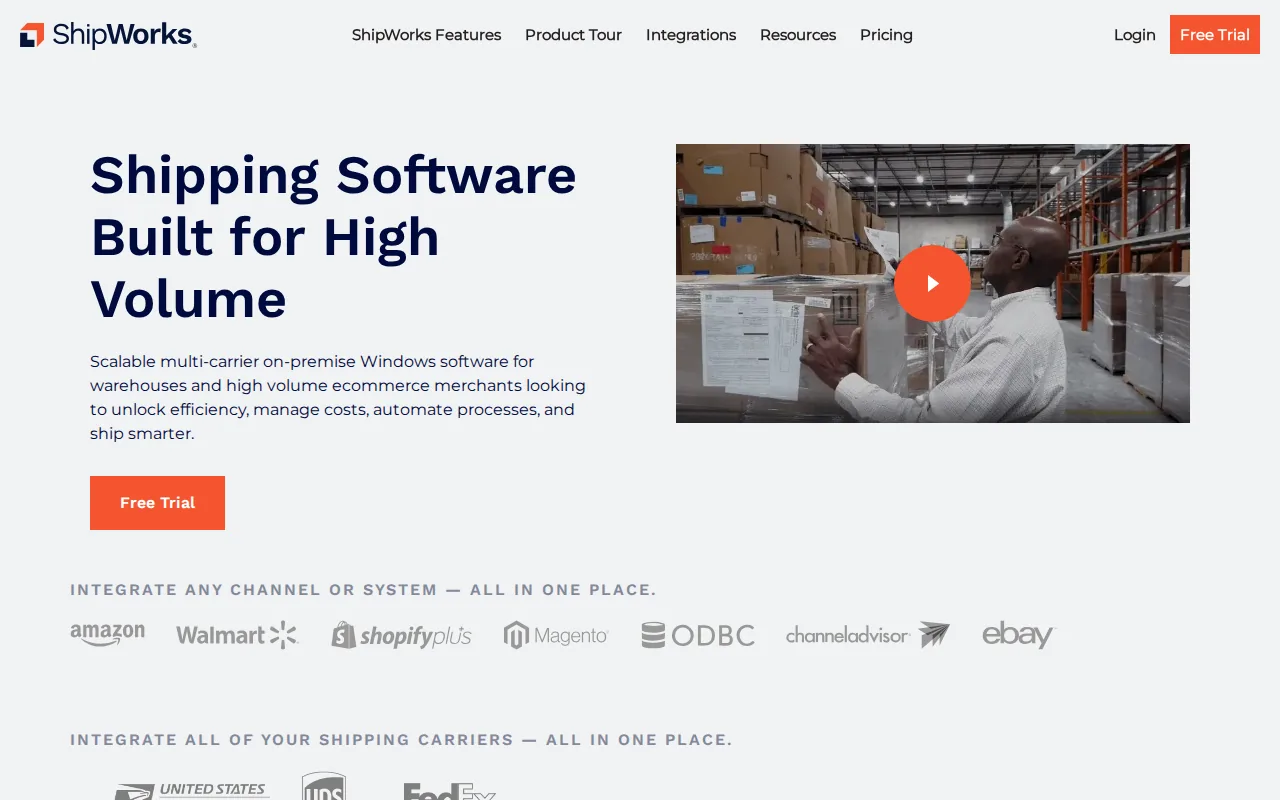
Its place on this shortlist comes from granular automation. Sellers can build rules around order handling and shipping workflows across Amazon Seller Central, their own site, and other marketplaces.
This is useful when a warehouse needs different treatment for oversized parcels, urgent orders, or specific destinations. A rule can reduce repeated choices at the packing desk, while a shared queue gives managers a clearer view of what is waiting.
ShipWorks is less suited to a small store that only needs basic labels. It also does not cover the full upstream workflow, such as supplier communication or invoice matching. Use it when operational control matters more than a quick setup.
For a broader view of eCommerce inventory tools, compare the systems that track stock against those that also follow purchase orders and supplier updates. The distinction is easy to miss, and the wider supply chain software comparison sets out where one ends and the other begins.
5. Ordoro, inventory control for FBA, warehouses, and dropshipping
Ordoro fits Amazon sellers with stock spread across FBA, a warehouse, and dropshipping suppliers.
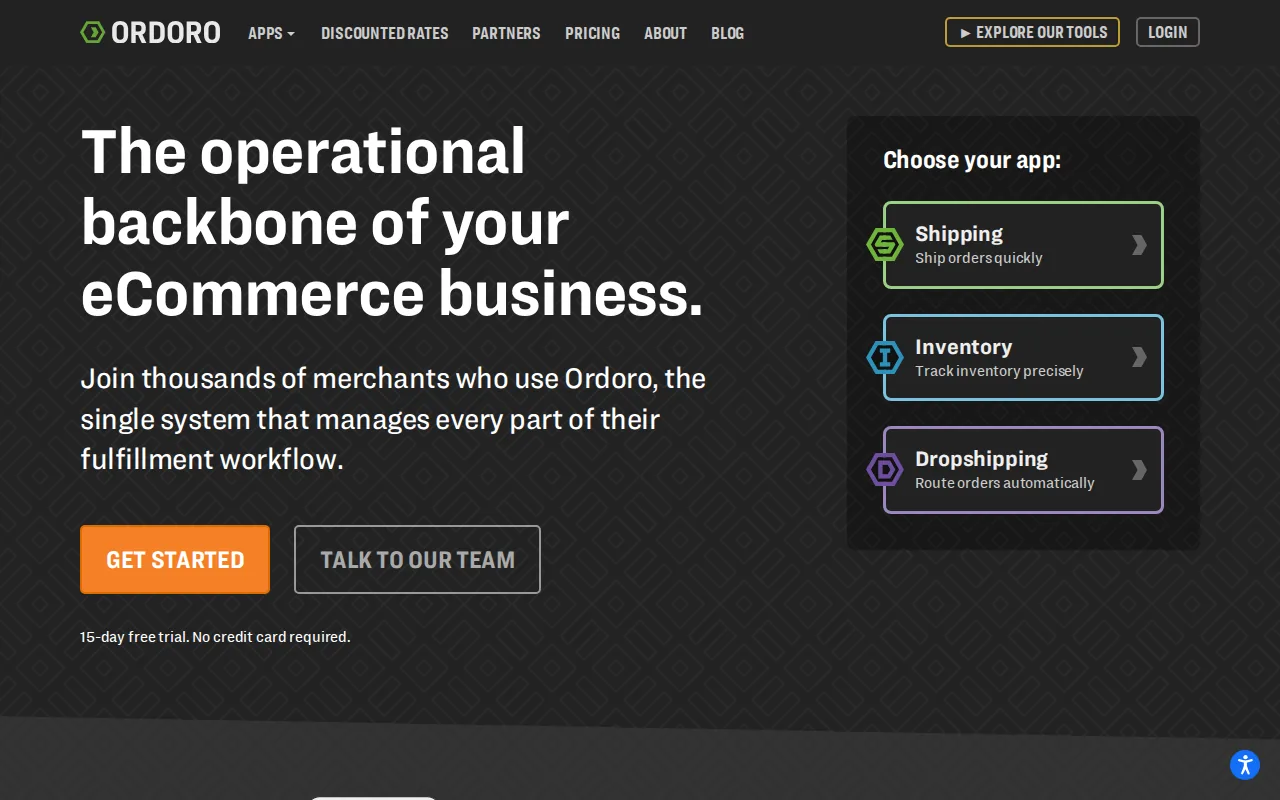
Ordoro can import Amazon FBA inventory and sync quantities with connected sales channels.
That helps prevent a Shopify customer from buying stock that Amazon has already sold. It also gives a seller one place to check stock across different fulfillment paths.
Ordoro is an inventory and order control choice, not a full supplier-cost workspace. If your biggest risk is overselling across channels, it may fit. If your biggest risk is paying the wrong unit cost, look upstream at SupplyAutomate.
See the eCommerce inventory management software comparison when you need to separate stock tracking from import operations.
6. Easyship, international delivery, duties, and tax management
Easyship is built for Amazon sellers with meaningful international sales and a need to compare many carrier options.
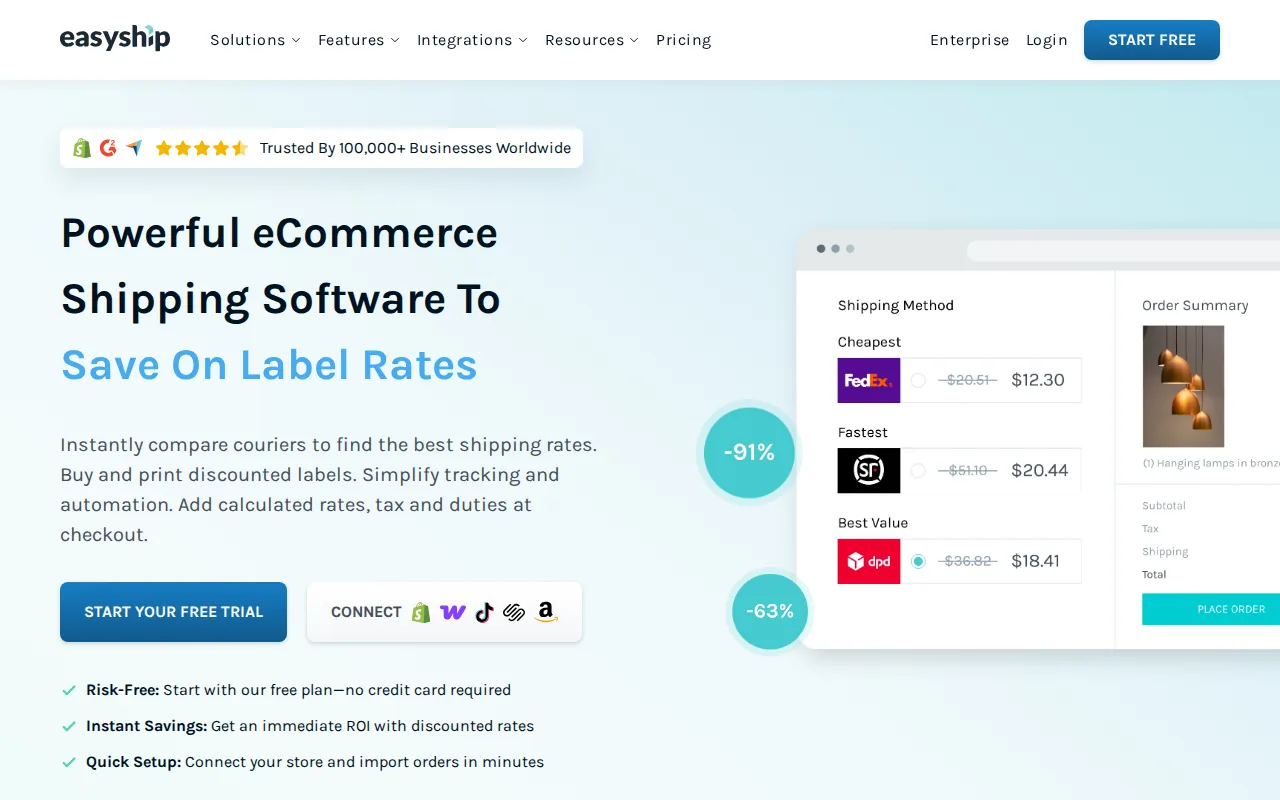
Easyship integrates with Amazon Seller Central, offers access to more than 550 carriers, and provides duty and tax automation. It also has a free tier for up to 50 shipments per month, which can help a small seller test international workflows before taking on a larger plan.
Cross-border costs are easy to miss. A product's margin can change after duty, customs handling, currency conversion, and a carrier surcharge enter the bill. Easyship helps at the delivery stage, where those choices affect the customer's final experience.
It won't replace supplier tracking or purchase order control. Treat it as the international shipping layer, then make sure those shipping costs flow into the same margin view as product cost. The method for doing that is set out in this guide to calculating landed cost for imported products.
For import-heavy brands, invoice capture matters too. A tool such as purchase invoice processing software for Amazon and Shopify can help connect documents to the right order.
7. ShipBob, outsourced fulfillment for non-Amazon sales channels
ShipBob suits Amazon sellers who want to outsource fulfillment for Shopify and other direct-to-consumer channels.
ShipBob integrates with Amazon Seller Central, Shopify, and other direct-to-consumer platforms. That makes it useful when Amazon handles FBA orders but another fulfillment network handles website orders.
Outsourcing can reduce the daily work around picking, packing, and last-mile delivery. It can also give a growing brand a way to serve non-Amazon demand without building its own warehouse process.
The trade-off is control. A 3PL adds another handoff, another fee schedule, and another inventory feed to check. You need clear rules for stock ownership, returns, receiving, and replenishment before moving volume.
ShipBob is best when fulfillment labor is the problem. It is not the right first tool for supplier documents or landed-cost math.
8. Xneeti, AI forecasting and marketplace inventory optimization
Xneeti targets mid-size and large Amazon and Walmart brands that need demand forecasts and replenishment plans.
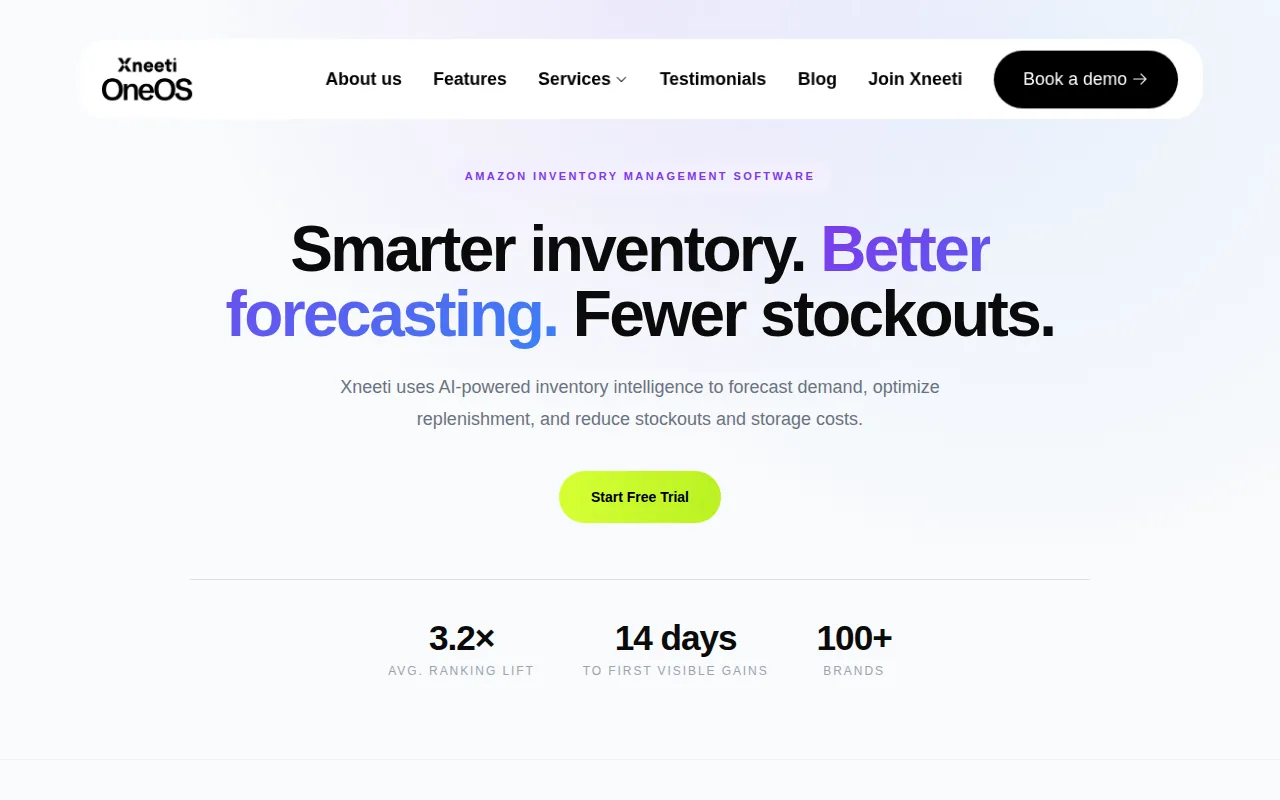
Its platform uses sales history, seasonality, marketplace trends, and sales velocity to forecast future stock needs. It also monitors inventory age, sell-through, inbound shipments, and stockout risk.
That gives managers more than a current stock count. A forecast can show when a purchase order should move, while lead-time data helps set a safer reorder window. The reorder point formula for importers explains how to build that window from supplier lead time and demand variability rather than a fixed rule of thumb. Xneeti also describes recommendations for excess stock and slow-moving SKUs.
The listed integrations are Amazon Seller Central and Walmart, not Shopify or WooCommerce. Review the data handoff carefully if your store has a direct-to-consumer channel.
Forecasting is only as good as the inputs. Supplier delays, tariff changes, ad shifts, and sudden demand spikes still need human review.
Compare the Best Amazon FBA Supply Chain Software
The right Amazon FBA supply chain software depends on where stock and margin problems begin. Amazon's fulfillment process starts with sourcing and a purchase order. Goods move through production, freight, customs, and receiving. After inventory reaches FBA, Amazon stores it, allocates units through its network, picks and packs orders, then handles last-mile delivery.
That flow has several cost points: product cost, freight, duty, prep, inbound placement, storage, fulfillment fees, referral fees, returns, and advertising. A good system should show the cost at the SKU level instead of leaving it scattered across PDFs and spreadsheets.
| Best fit | Shortlist pick | What it handles | Main watch-out |
|---|---|---|---|
| Import costs and supplier work | SupplyAutomate | Documents, POs, supplier messages, landed cost | Not a broad enterprise ERP |
| Growing multichannel shipping | ShipStation | Amazon orders, carriers, shipping rules | Setup can take time |
| Predictive shipping cost | ShipPost | Carrier and route cost decisions | Shipping-focused scope |
| Complex shipping rules | ShipWorks | Detailed order automation | Too much control for simple stores |
| Mixed inventory channels | Ordoro | FBA stock sync with other channels | Not a full landed-cost system |
| International delivery | Easyship | Carrier choice, duties, taxes | Upstream supplier work stays separate |
| Outsourced DTC fulfillment | ShipBob | 3PL fulfillment for non-Amazon orders | Less direct warehouse control |
| Forecasting for Amazon and Walmart | Xneeti | Demand forecasts and reorder planning | Check direct-store coverage |
Some fulfillment services store bulk inventory before it moves into fulfillment or other channels. Storage and distribution terms vary, so verify current terms before planning cash flow.
Amazon's machine-learning systems can help place replenishment stock in suitable fulfillment centers. Still, outside software can add supplier lead times, document checks, and cost data that Amazon does not own. That is where a connected workflow earns its keep.
Risk control also needs a plan. Hold more stock only when cash flow can support it. Diversify suppliers instead of relying on one store or factory. Track what is missing, then test backup sources. During a supply shock, review repricing rules so low supply does not force you to sell at yesterday's margin. A supplier evaluation matrix is a practical way to score those backups before you need them.
For U.S. sourcing, sellers can search supplier directories such as ThomasNet or Wholesale Central, then check certifications, location, lead time, and sample quality. A U.S. supplier may cost more before tariffs and freight are counted, so compare the full landed cost rather than the unit quote alone.
Our free supply chain calculators can help you check FBA profit, duty, freight, and margin before you commit to a reorder, and the lead time calculator models production, transit, and customs before the next PO goes out.
Frequently Asked Questions
What is the best Amazon FBA supply chain software?
SupplyAutomate is the strongest first choice for import-heavy Amazon FBA and Shopify sellers. It connects purchase orders, supplier communication, document processing, and landed-cost tracking in one browser app. Shipping-focused tools may fit better when your only issue is labels or carrier rates. Start by mapping one SKU from supplier quote through Amazon sale.
Can Amazon FBA software manage Shopify inventory?
Some Amazon FBA software can sync inventory with Shopify, but coverage varies by tool. Some tools can sync FBA quantity data with Shopify and WooCommerce, but the timing and coverage vary. ShipBob lists Shopify support. Check whether the tool syncs only stock or also orders, costs, returns, and fulfillment status.
How does FBA supply chain software reduce costs?
It reduces costs by exposing waste before it becomes a bill. A system may compare carrier rates, flag slow stock, improve reorder timing, or assign freight and duty to the right SKU. The biggest gain often comes from seeing true landed cost, because a low factory price can hide expensive freight, tariffs, storage, or prep.
What should Amazon sellers track in a supply chain tool?
Track purchase order status, supplier lead time, inbound shipments, available stock, aged inventory, sell-through, and stockout risk. Also track freight, duty, prep, storage, fulfillment, and return costs. The goal is one view that answers two questions quickly: when will stock arrive, and what margin will remain after every cost?
Is inventory forecasting enough for Amazon FBA?
Inventory forecasting helps, but it is not enough by itself. Forecasts need current sales data, seasonality, supplier lead times, inbound stock, and cash limits. They also need human review when tariffs shift, a supplier slips, or an ad campaign changes demand. Use forecasting to guide purchase orders, not to approve them blindly.
Conclusion
Choose SupplyAutomate if supplier work, document chaos, and unclear landed costs are slowing your Amazon FBA or Shopify business. Pick the shipping or forecasting tools above when that is the narrow problem. Next, trace one SKU from purchase order to customer sale and measure every handoff before you choose a wider rollout.