
Supplier data gets messy fast. Purchase orders sit in inboxes, supplier updates land in chat, and the true cost of each SKU stays hidden until margin slips. Here are the best supplier management software picks, with SupplyAutomate first for Amazon FBA, WooCommerce, Shopify sellers and enterprise tools ranked by fit.
1. SupplyAutomate, AI-driven supplier workflows for e-commerce
SupplyAutomate is supplier management software for Amazon FBA sellers, Shopify store owners, and growing e-commerce teams. We bring supplier messages, purchase orders, documents, and cost data into one web-based workspace.
The key difference is focus. SupplyAutomate is built around the work that happens before inventory reaches your warehouse. Upload invoices, packing lists, freight bills, or customs documents. Our AI reads them, matches them to the right order, and adds the costs to your product record.
That gives you a live view of landed cost, which means the full cost of getting a product ready to sell. You can see supplier pricing beside freight, duties, and other import costs instead of relying on a rough factory quote. For a detailed operating model, see the true cost of a product from factory to warehouse.
SupplyAutomate also names its e-commerce connections clearly. It is designed for Amazon FBA and Shopify, rather than a broad ERP-first setup. That matters when your daily questions sound like, what is late, what did this shipment really cost, and can I reorder this SKU?
We also keep supplier communication tied to the order it affects. That cuts the hunt through WeChat, email, spreadsheets, and PDF files. You get one record instead of five partial answers. Supplier paperwork follows the same rule, and the guide to organizing supplier invoices covers the file structure that keeps documents attached to the order they belong to.
The caveat is scope. SupplyAutomate is a strong fit for online brands that import goods. It isn't meant to replace a large enterprise procurement suite with complex sourcing, legal review, or global supplier governance.
If purchase orders, supplier follow-up, and true product cost sit at the heart of your operation, this is the clearest match.
For a broader look at e-commerce supply chain workflows, see our comparison of supply chain management software for e-commerce brands.
2. HighRadius, ERP-integrated supplier management for global enterprises
HighRadius is supplier management software for global enterprises that need supplier onboarding tied to finance and ERP work. Its strength is a supplier portal that collects profiles, tax details, banking information, and other documents through a structured process.
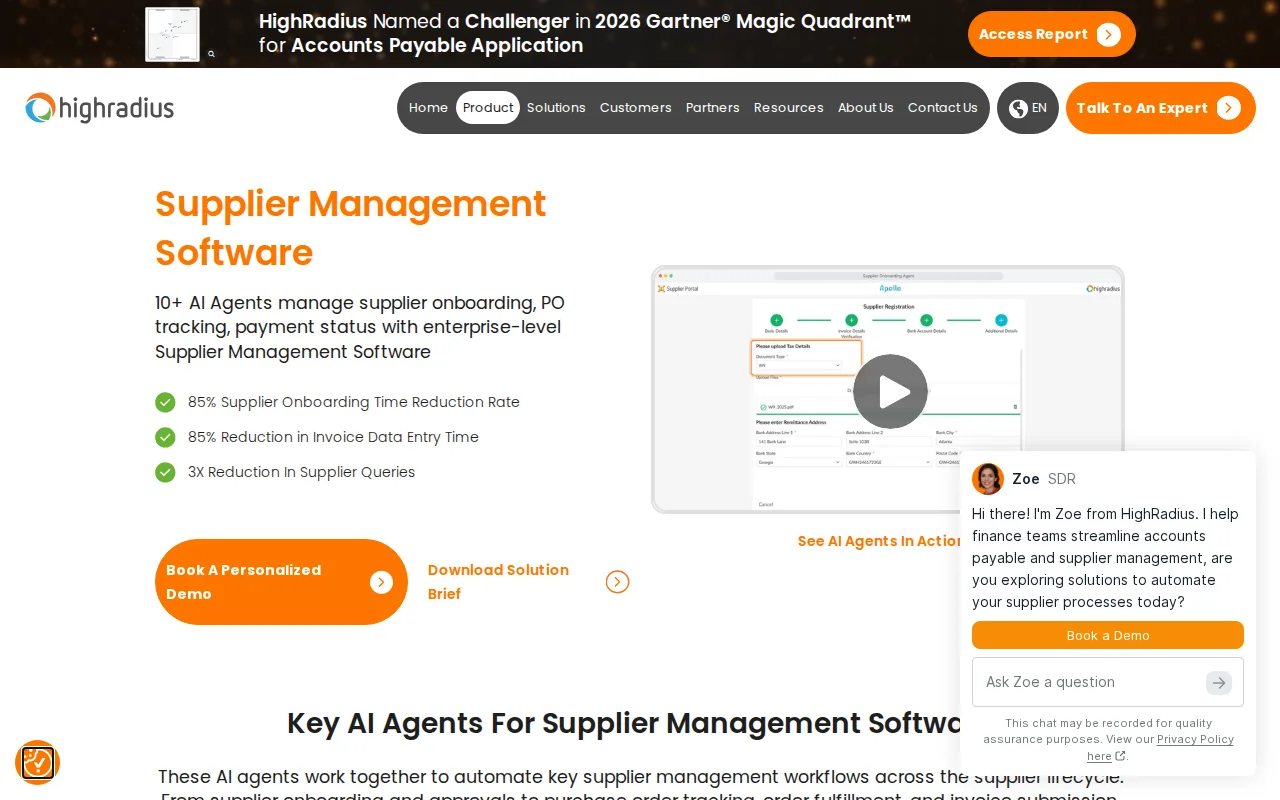
HighRadius automates onboarding, compliance checks, and supplier communication.
That design fits a finance team that needs clean supplier master data. A supplier can enter its own details, upload documents, and check invoice or payment status. Accounts payable staff can then focus on exceptions instead of retyping every field.
The platform also connects supplier activity to purchase orders and invoices pulled from an ERP. Suppliers can confirm or reject purchase orders, while buyers can track fulfillment documents and payment questions in one portal.
HighRadius says its workflow supports regional rules and approval paths. That can help a global business apply different tax, risk, or compliance checks by region.
Its limitation is fit for smaller sellers. A company with a handful of overseas factories may find an ERP-linked AP suite too large for the problem. Pricing also varies with supplier volume, users, compliance needs, and integration work.
For a large finance operation, the value is control. For a small e-commerce brand, start with the system that follows your actual order flow. If the invoice side is the part that hurts, compare the shortlist in our guide to accounts payable automation software.
3. SAP Ariba, end-to-end supplier information and lifecycle management
SAP Ariba is supplier management software for global enterprises that already run large procurement operations. It covers supplier information, lifecycle work, compliance, qualification, and performance in one procurement setting.
Its main appeal is breadth. A procurement team can use structured workflows for onboarding and then keep supplier records active through qualification and performance review. That helps prevent the common problem where onboarding is controlled, but supplier data becomes stale six months later.
Supplier management is also tied to risk. Teams can set review points, gather qualification details, and keep a record of supplier decisions. Scorecards can then connect supplier performance to sourcing and procurement choices.
This is the kind of system that suits multiple regions, business units, and approval groups. It can support a shared supplier record while still allowing different teams to apply their own rules.
There is a cost to that scale. SAP Ariba needs careful process design, data cleanup, user training, and integration planning. If your team mainly needs to track factory replies and landed cost by SKU, much of the suite may go unused.
Choose SAP Ariba when procurement governance is the center of the job. Choose a more focused system when supplier work is tightly tied to e-commerce orders.
4. Coupa, unified spend and supplier visibility across procurement
Coupa is supplier management software built around spend visibility and procurement workflows. It helps teams connect supplier information with purchasing activity, risk tracking, and collaboration.
Its supplier portal gives vendors a place to update information and work with buyers. That can reduce email follow-up when a supplier needs to update a record, answer a question, or provide a document.
Coupa's stated strength is a shared view of supplier and spend data. Procurement leaders can see where money goes while supplier teams look at compliance and relationship details in the same broader workflow.
The research also lists integrations with Rossum and Tonkean. Those connections point to a wider automation approach, where document work and process steps can move between systems rather than stay in a buyer's inbox.
That setup is useful when procurement wants one place to review supplier activity across departments. It can reduce repeated requests for the same data and make approval ownership clearer.
The trade-off is that Coupa is procurement-first. It may not give an e-commerce brand the product-level landed-cost view it needs for each SKU, shipment, and marketplace channel.
Use Coupa when spend control and supplier visibility need to span a larger procurement function. It is less direct for a founder who needs to answer a shipment question before lunch.
5. Jaggaer, automation for complex enterprise supplier networks
Jaggaer is supplier management software for large organizations in manufacturing, healthcare, and the public sector. Its focus is supplier data, performance, risk, and workflow control across a complex source-to-pay process.
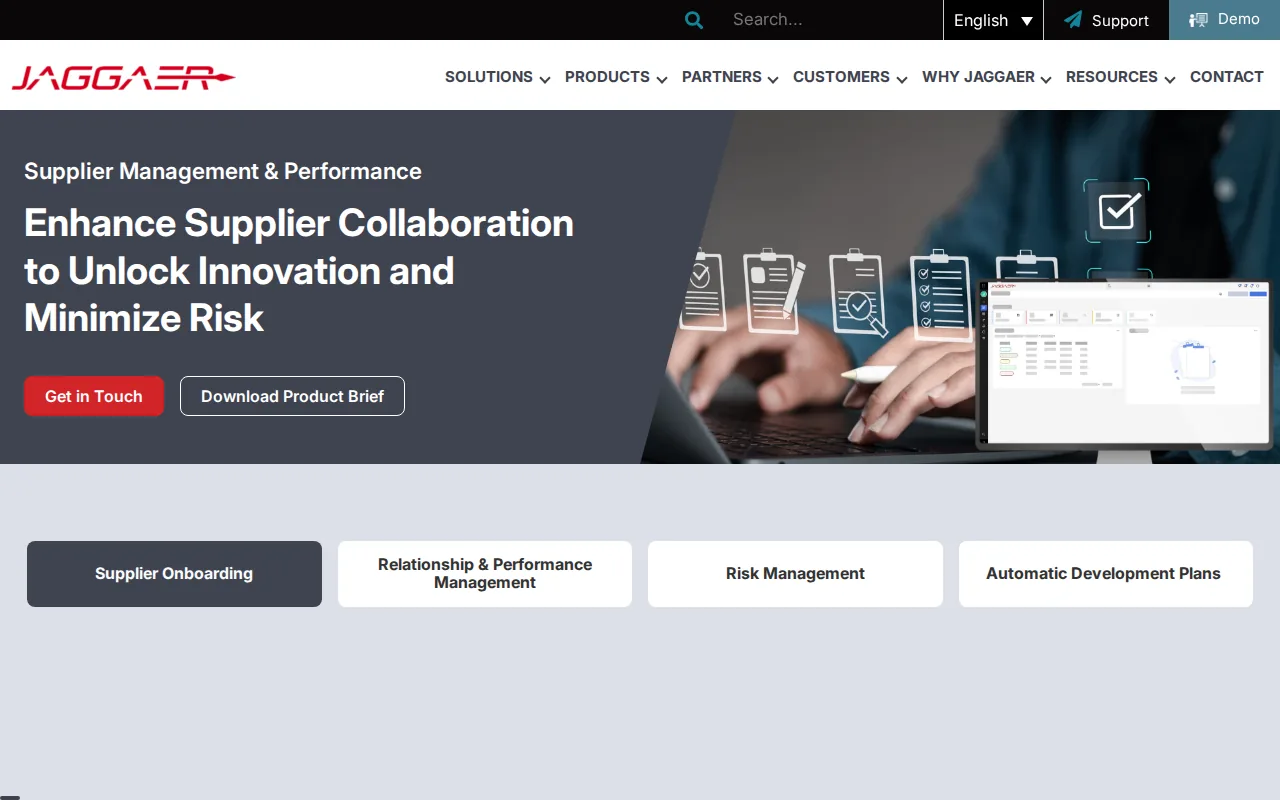
Jaggaer stands out for its stated ERP reach. The research lists more than 40 ERP systems, including SAP, Oracle, Workday, and Microsoft Dynamics. That matters when a procurement team must fit supplier work around systems already used by finance, HR, or operations.
Its automation-first approach can help standardize supplier onboarding. Instead of letting each department invent its own form and approval chain, the business can set a common path for qualification and review.
Performance tracking matters here. A supplier scorecard can include delivery, quality, price, policy compliance, and other measures. The point is to turn scattered complaints into a record that procurement can review with the supplier.
Jaggaer also fits teams that need reports across many supplier groups. A heat map can show where risk is high, while a trend view can show whether a supplier is improving after a corrective action.
The drawback is implementation effort. A system with broad ERP connectivity needs clear ownership for supplier data, approval rules, and reporting definitions. Without that work, the software can mirror messy processes instead of fixing them.
Jaggaer makes sense when the supplier network is large enough to justify a formal operating model.
6. GEP SMART, AI-powered supplier risk and performance intelligence
GEP SMART is supplier management software inside a cloud procurement platform. It brings supplier data, performance measures, risk profiles, sourcing, and spend analysis into one system.
GEP SMART is aimed at enterprises with complex procurement needs. It can automate work that starts with a supplier request and continues through onboarding, monitoring, performance analysis, and compliance reporting.
That combination is useful when supplier performance needs to connect to sourcing decisions. For example, a procurement team may compare a supplier's delivery record with spend and contract data before opening a new sourcing event.
GEP SMART also has a broad ERP posture. Its supplied source says the platform is designed to work with SAP, Oracle, and other major ERP or finance systems. That helps large teams avoid building a separate supplier database beside their main procurement stack.
AI alone shouldn't decide whether a supplier is safe. The useful test is simpler: does the system show the source of a risk score, route exceptions to a person, and keep an audit trail?
GEP SMART is a strong enterprise fit. Smaller e-commerce teams may find its full procurement scope wider than needed.
Key Takeaway: AI claims matter less than named integrations, clear data sources, and a workflow that tells a person what to review next.
7. Ivalua, unified supplier relationships, risk, and performance
Ivalua is supplier management software that gives procurement teams one view of supplier relationships, risk, and performance. It fits organizations that want supplier work connected across onboarding, compliance, collaboration, and review.
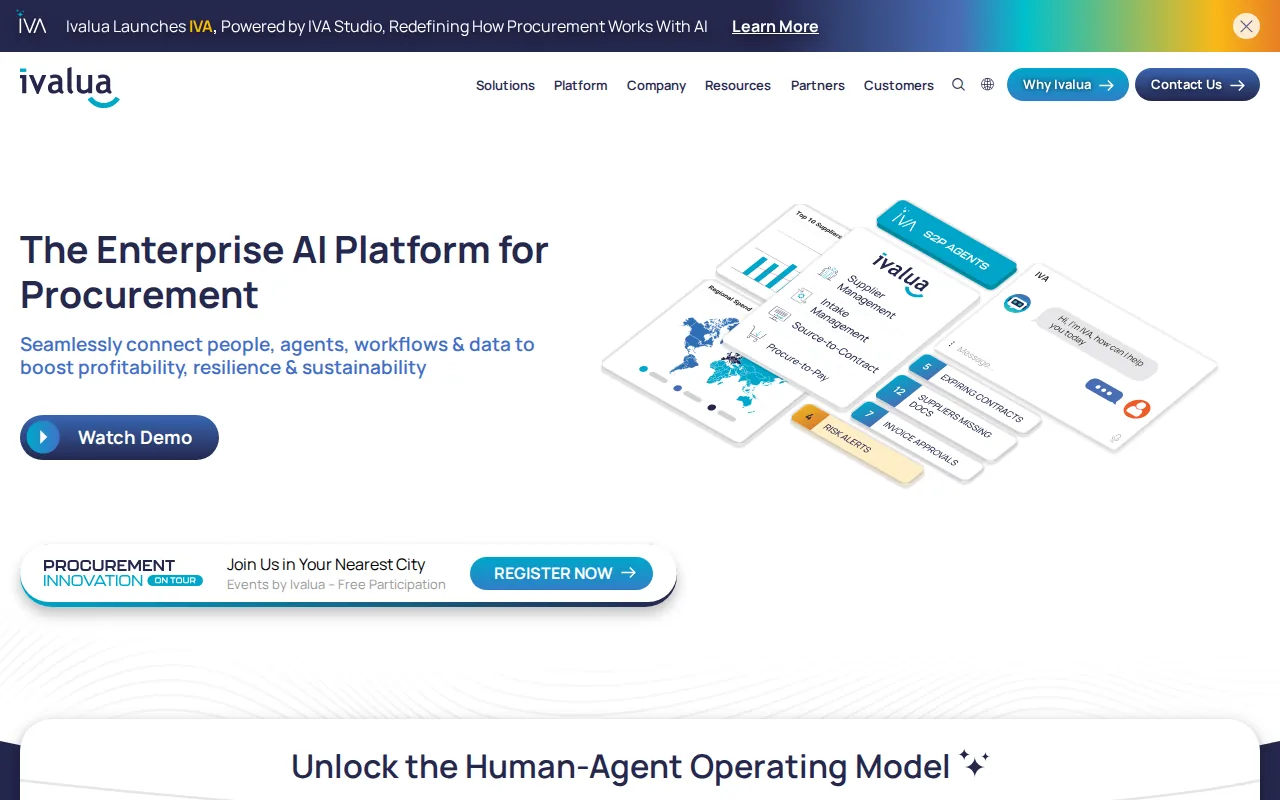
The platform's strength is the shared supplier record. Teams can bring supplier details into one place, then use workflows to manage qualification and compliance tasks. That helps buyers see more than a name and a contract.
Ivalua also supports performance work through dashboards and configurable processes. A buyer can define the measures that matter for a supplier group, then review results over time rather than rely on one-off calls.
Collaboration is another useful angle. Supplier management works better when vendors can respond to requests, provide documents, and work through issues without sending a new email for each step.
This can suit a procurement team with different supplier types and risk rules. A high-risk supplier may need more checks than a low-risk service provider, while both still belong in the same record system.
The caveat is the same one found in many enterprise platforms. A configurable workflow needs someone to own the design. If every team asks for its own version, reporting becomes hard to compare.
Ivalua is best for organizations that want a broad supplier relationship system rather than a narrow supplier contact list.
8. Zycus, AI-assisted onboarding, risk assessment, and monitoring
Zycus is supplier management software with AI-assisted onboarding, risk assessment, and performance monitoring. It is aimed at procurement teams that want automation around approvals and supplier compliance.
Zycus also fits a continuous review model. Supplier onboarding should be the first check, not the last one. Financial changes, policy changes, new locations, and missed delivery targets can all trigger a fresh review.
Risk scoring can help teams sort a large supplier base. But a score needs context. A late shipment from a low-risk packaging supplier is different from a compliance gap at a supplier handling a regulated component.
Analytics can help procurement compare approval times, supplier response rates, and performance results. Those views are more useful when each metric has an owner and a clear action attached.
The limitation is fit for very small teams. If you only manage a few suppliers and most work happens through purchase orders, a full AI procurement layer may add more setup than value.
Zycus belongs on an enterprise shortlist when supplier approvals and risk checks need more structure.
9. Procurify, intuitive onboarding, contracts, and approval workflows
Procurify is supplier management software that centralizes supplier onboarding, contracts, and approvals. It is a fit for organizations that need a clear path from a new supplier request to an approved vendor record.
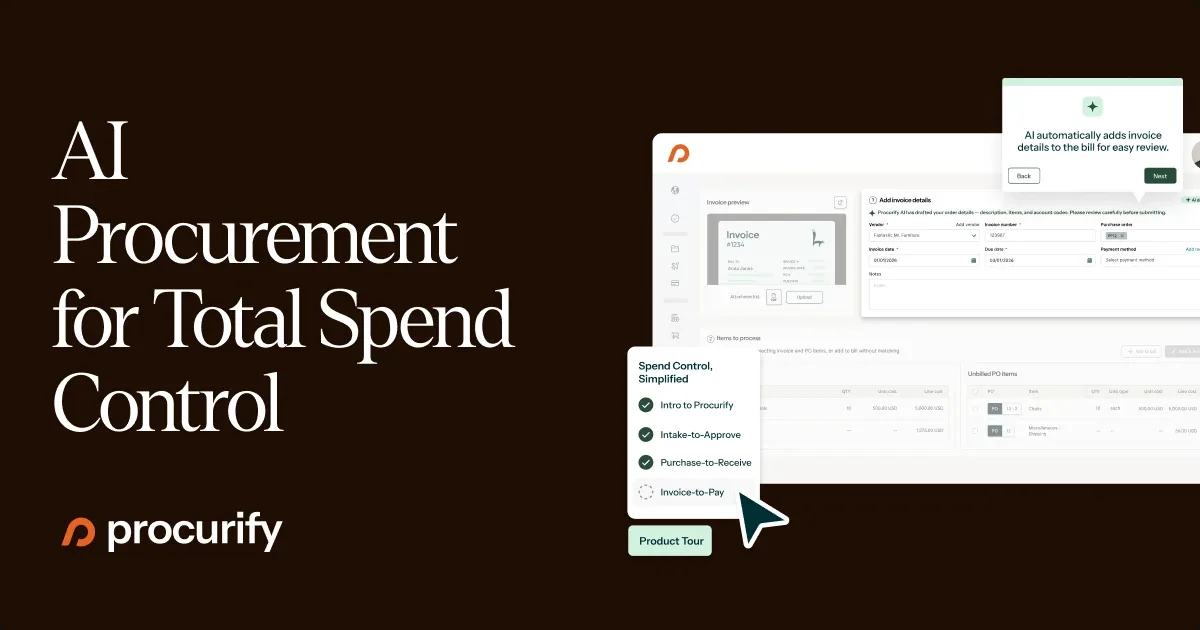
Its main value is process clarity. A supplier request can move through defined approvals instead of sitting in a shared inbox with no clear owner. Contract information can stay tied to the supplier record, which makes renewal reviews easier to manage.
This type of workflow helps when many departments buy from suppliers. Finance may need tax or payment details. Operations may need service information. Procurement may need approval against policy. A shared process reduces duplicate work.
Still, buyers should test the system against their actual supplier metrics. If your key concern is landed cost by SKU, shipment document matching, or factory lead time, a contract and approval focus may not be enough.
Pick Procurify when the main gap is vendor intake and internal approval control. Teams weighing this against a wider purchasing system can compare the options in our guide to procurement software for small business.
10. Oracle Supplier Management, portal-based collaboration and performance tracking
Oracle Supplier Management is supplier management software for enterprises that want supplier onboarding, collaboration, and performance tracking connected to a broader business system.
Its unified portal lets suppliers manage profiles, orders, and invoices. Buyers get a central view of supplier information, compliance details, and risk factors rather than relying on separate files.
The portal model can improve supplier self-service. A vendor can update its own profile or check an order status, while the buyer keeps control over approvals and required documents.
Performance tracking adds a second layer. Supplier results can be reviewed against delivery, quality, price, and compliance measures. Those measures should be set before rollout, or the scorecard will become a list of opinions.
Oracle Supplier Management is a natural candidate for an organization already using Oracle business systems. The benefit is less about adding another isolated database and more about keeping supplier activity near procurement and finance records.
The caveat is complexity. Smaller brands may need only supplier communication and landed-cost tracking. In that case, an enterprise portal can be more system than the team needs.
Oracle fits the enterprise buyer that wants portal collaboration tied to a wider business platform.
11. Kodiak Hub, AI-enabled supplier collaboration, risk, and sustainability
Kodiak Hub is supplier management software for organizations that want supplier collaboration alongside risk, compliance, and sustainability work.
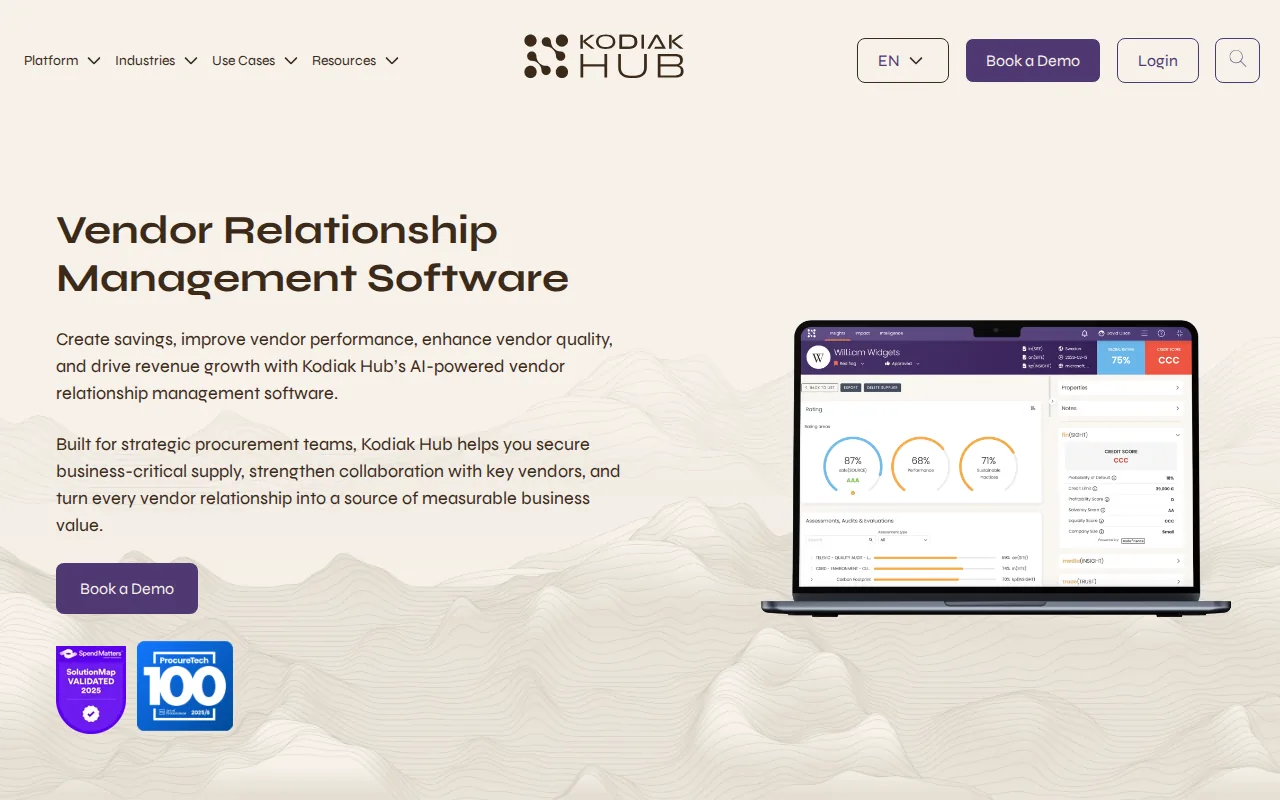
Its supplier onboarding and assessment focus can help teams collect supplier details, run assessments, and keep review work in a shared process. That matters when supplier checks involve procurement, quality, compliance, and sustainability staff.
Risk monitoring is more useful when it leads to a task. A dashboard can flag a supplier, but someone still needs to request evidence, set a due date, or open a corrective action. Kodiak Hub's positioning centers on that collaboration between teams and suppliers.
Sustainability goals also need supplier-level records. A business may need to track a supplier's response to a policy, assessment, or compliance request. Keeping those exchanges in the same supplier file makes later reviews easier.
The platform is aimed at organizations with formal supplier governance. It may be too broad for a small seller whose biggest issue is matching a freight bill to an Amazon FBA purchase order.
Look at Kodiak Hub when supplier assessment and sustainability work are part of your buying process, not side projects.
Supplier management software comparison: which platform fits your team?
The best supplier management software depends on the work you need to control. Supplier management software normally centralizes supplier records, standardizes onboarding, tracks compliance, and measures performance. It sits close to procurement, but it can also connect with finance, quality, risk, and operations.
For an Amazon FBA or Shopify brand, the first test is simple: can the system follow the order, supplier message, shipment document, and landed cost in one flow? For an enterprise, the test may be different: can it support regional approvals, ERP data, audit trails, and thousands of supplier records?
| Best fit | Strongest match | What to test first | Main watch-out |
|---|---|---|---|
| Amazon FBA or Shopify seller | SupplyAutomate | Supplier messages, PO tracking, SKU landed cost | Less suited to broad enterprise procurement governance |
| Global finance and AP team | HighRadius | ERP sync, tax checks, supplier self-service | May be too large for a small brand |
| Global procurement organization | SAP Ariba | Lifecycle, qualification, compliance, performance | Needs strong rollout planning |
| Spend-led procurement team | Coupa | Spend visibility and supplier collaboration | Product-level e-commerce cost may need extra work |
| Complex multi-system enterprise | Jaggaer | ERP connections and configurable workflows | Data ownership must be clear |
| Supplier risk and performance program | GEP SMART | Risk profiles, analytics, and monitoring | Full scope may exceed SMB needs |
| Supplier relationship governance | Ivalua | Risk, performance, and collaboration views | Configuration can grow quickly |
| Supplier assessment and sustainability | Kodiak Hub | Assessments, compliance, and supplier action plans | Less focused on e-commerce order execution |
Features worth checking before you buy
Start with the supplier lifecycle. Can the software move a supplier from request to onboarding, active monitoring, and offboarding? Can it remind an owner when a certificate, insurance file, or qualification review expires?
Next, inspect the data model. A useful supplier record should connect the supplier to contracts, purchase orders, invoices, performance results, and risk reviews. If those records stay in separate modules with no shared ID, reporting will still take manual work.
Then check the scorecard. Good supplier performance metrics include:
- On-time delivery, measured against the agreed date.
- Quality, such as defects, returns, or failed inspections.
- Financial health, payment risk, or major ownership changes.
- Compliance status and missing documents.
- Price variance against the approved quote or contract.
- Response time when a buyer raises an issue.
Scoring those measures consistently is its own exercise, and our supplier evaluation matrix guide sets out how to weight them before a review meeting.
For e-commerce, add landed cost and actual lead time. A supplier can ship on time from the factory and still miss your customer promise if freight or customs adds weeks. Model the gap in the lead time calculator, then use the reorder point formula for importers to connect actual lead time with inventory planning and reduce stockout risk.
Integration claims need close review. In the comparison sample used for this shortlist, only four of 11 products disclosed integration information. Seven disclosed none. That makes named connections more useful than vague promises about AI.
Finally, plan adoption. Pilot the system with one supplier group. Clean the supplier master first. Train the people who approve records and the suppliers who must submit them. Then measure onboarding time, missing data, late deliveries, and unresolved supplier questions.
Pro Tip: Ask each vendor to show one real workflow using your own purchase order, supplier document, and performance metric. A polished demo is less useful than seeing how an exception gets handled.
SupplyAutomate is the sensible first test for an online brand that imports products. You can review supplier progress while checking the cost that will actually affect marketplace margin. Our guide to tracking product costs across the supply chain explains why each cost should stay tied to a supplier, purchase order, shipment, or SKU.
Key Takeaway: Pick the platform that matches your daily supplier decisions, not the one with the longest feature list.
FAQ
What is supplier management software?
Supplier management software is a system that stores supplier data and controls the supplier lifecycle. It can handle onboarding, document collection, compliance checks, performance scorecards, risk reviews, collaboration, and offboarding. The best fit depends on whether you manage e-commerce suppliers, service vendors, or a large global procurement network.
What is the best supplier management software for e-commerce?
SupplyAutomate is the strongest fit for Amazon FBA and Shopify sellers. It connects supplier communication with purchase orders, documents, shipments, and landed-cost insight. Enterprise procurement suites can manage broader governance, but they may not follow the product-level cost questions that shape an online seller's margin.
What metrics should supplier management software track?
Supplier management software should track delivery, quality, price, compliance, financial risk, and response time. E-commerce teams should also track actual lead time and landed cost by SKU. Those measures show whether a supplier is helping you receive sellable inventory at the cost and time your business planned.
What is the difference between a VMS and supplier management software?
A VMS usually focuses on contingent workers, staffing suppliers, and external workforce processes. Supplier management software usually covers product suppliers, service vendors, contracts, qualification, risk, performance, and procurement data. Some features overlap, so choose based on what you buy and the type of supplier relationship you need to manage.
Does supplier management software replace an ERP?
Supplier management software usually complements an ERP rather than replacing it. The supplier system can collect data, run approvals, manage documents, and track performance while the ERP remains the main record for finance, purchasing, or inventory. Smaller e-commerce teams may use a focused platform without a large ERP stack.
How long does supplier management software take to implement?
Implementation time depends on supplier count, data quality, workflows, and integrations. A small pilot can move faster than a global rollout with regional compliance rules. Start with one supplier group, define the required fields, test one approval path, and measure results before expanding to every department.
Conclusion
Choose SupplyAutomate if you sell on Amazon FBA or Shopify and need supplier communication, purchase orders, documents, and landed cost in one place. Start by bringing in a recent supplier order and its cost documents, then use the workspace to see what is late and what the product truly costs. Start with SupplyAutomate for your e-commerce supply chain.